

Blog
Magnetized by the TMS myth
Drowning in fudge
Mar 07, 2026
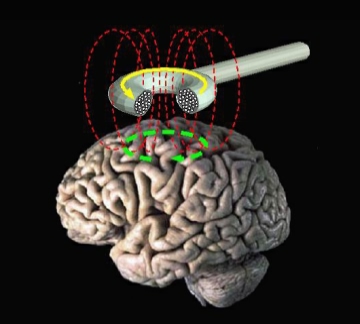
It emerged from the violence of electroconvulsive therapy (ECT) as the more refined and respectful offspring. Initially it was a research tool but was soon recognized as a possible new intervention. It also stimulated the brain, but in the form of a magnetic pulse which created the electrical stimulus that influenced the brain. It became known as Transcranial Magnetic Stimulation, or TMS.
No sooner had it been refined, eyes turned to that murky ill-defined space of depression. The hypothesis was that if specific areas of the brain associated with depression alleviation could be stimulated, then a new intervention for depression could be introduced, coded and billed. However one small issue existed and has prevailed to the present time – there is no clear definition of the nature of depression. Is it a state devoid of happiness, in other words unhappiness? Is it a state of pessimism, hopelessness, helplessness or even joylessness? If joyfulness and meaningfulness spring forth from the concept of ikigai or meaningful busyness, then is depression the consequence of a life devoid of ikigai?
Then of course there’s that other little niggle – if you can’t precisely define the entity, how will you identify the structures in the brain that support happiness and unhappiness? There is a fear centre and a reward centre and when there is much fear (fear, anxiety, panic and anger) there is suppression of the reward centre. But fortunately when there is reward there is suppression of the fear centre. Then there are three centres which support empathy, trust, belief and awe. I guess if you mixed and matched these centres you could possibly squeeze out something approximating happiness versus unhappiness. Of course if you removed the connections from both pre-frontal lobes like my neurosurgical ancestors attempted to do in those wicked days of yore, you could remove that oppressive suppressor of a carefree existence. But I personally prefer a bottle in front of me than a frontal lobotomy!
Getting back to TMS and depression, the boffins in their wisdom decided that if you stimulated an area near the dorso-lateral pre-frontal cortex, the patients became less depressed, or less unhappy, possibly also more hopeful. But alas, authoritative, peer reviewed studies showed no significant benefits of TMS in alleviating depression/unhappiness/joylessness in the stimulated group as compared to the sham group (all the bells and whistles sans the stimulation). This was observed even when they fudged the figures – many dropped out of the study that had experienced no benefit, which resulted in an increased number of subjects experiencing some benefit. In other words the stats were intentionally skewed!
But something flipped when the TMS device manufacturers began to sponsor the studies: The success rate for chronic depression improved by 40 - 50 percent ... and it was sustained. Questionable circumstances surround the approval of TMS by the FDA. But thereafter the momentum morphed into a hurtling juggernaut – a registered and safe intervention with ready-made codes for billing. On the back of this was suggested repetitive TMS or rTMS – the more sessions you had the better it got and so did the income!
There was still one further nagging item that needed to be resolved: How did this modality work? How did it leave an imprint in the functioning brain tissue? To garner neuroscientific respectability the researchers established TMS as a non-invasive neuromodulation modality. Neuromodulation refers to the neurosurgical application in which electrodes are inserted into specific areas of the brain and stimulated to elicit a long term effect. Alternatively, areas of the brain are rendered functionless (destroyed in other words) to achieve a similar end. Once neuroscientific respectability was established and TMS achieved the status as a modality of neuromodulation, research was undertaken in earnest to show that TMS gave rise to increased neuroplasticity – the growth of new neuronal processes and new intercellular connections.
Increased neuroplasticity can be indirectly demonstrated when the secretion of the chemical that promotes the growth of neuronal fibres, Brain Derived Neurotropic Factor (BDNF), increases. Additionally increased levels of dopamine and serotonin may also be associated with increased neuroplasticity. Moving into a more technical space, increased neuroplasticity may be detectable on fMRI scanning, EEG studies and the accelerated conduction velocity of electro-chemical signals within the brain. The latter can be demonstrated in visual evoked potentials – the velocity of a light stimulus that conducts from the retina to the visual cortex at the back of the head (visual cortex) is increased.
Well, all these metrics show increased values associated with TMS intervention. There’s just one snag ... all these metrics are known to increase with specific mind states! As you may well appreciate, you can’t eliminate the influences of the subjectivity of the individual from the mechanistic TMS manipulation. The subjective mind state that would disturb the sanitized neuroscientific data most significantly is that of the placebo effect – the belief in a modality of intervention enhances its effect by up to 50%! The placebo effect mediated primarily by oxytocin increases all the metrics associated with enhanced neuroplasticity – specifically, BDNF and dopamine levels are increased with multiple activated areas noted on fMRI scanning. Oxytocin also suppresses the activity of the amygdala – the seat of fear, anxiety, panic and anger.
It is my contention therefore that TMS is unsubstantiated as an authentic modality of neuromodulation. A lucrative confirmation bias has predisposed to the fudging of research data and birthed yet another pseudo-scientific tool of intervention. In the domain of mainstream medicine it parallels the questionable modalities that are promoted in the shadowy space of the ‘wellness and longevity industry’. Authentic medical science is indeed being overrun by pseudo-science in support of perverse, self-enriching incentives.